
South Bank Corporation
South Bank Corporation set a 90% diversion target.
To achieve it, they needed visibility into how their waste system was really performing.
South Bank Corporation (SBC) set ambitious sustainability targets, but lacked a reliable way to measure and manage its waste system.

The opportunity
A clearer picture of waste systems, operations and material flow
South Bank Corporation engaged Closed Loop to undertake a precinct-wide assessment of its waste systems and performance.
Initial reporting indicated a diversion rate of ~51.9%, however reliance on standard assumptions and limited verification reduced confidence in true performance.
SBC recognised the opportunity to establish a more reliable baseline – creating the foundation for improved environmental outcomes and cost efficiency.
This is a common challenge in complex precincts, where reporting does not always reflect operational reality.

The challenge
Like many large precincts, the system had evolved over time
South Bank’s waste system spans hospitality, retail and public spaces – each with different waste profiles, operational constraints and stakeholders.
Over time, this complexity reduced visibility and control, leading to:
-
Inconsistent data and limited visibility on true performance
-
Cross-contamination between waste streams
-
Recoverable materials entering landfill
-
Inefficiencies in servicing and system design
To achieve its targets, SBC needed a system it could clearly understand and actively manage.
Our approach
A detailed, precinct-wide assessment grounded in operational reality
Closed Loop combined data analysis with on-the-ground validation to build a reliable picture of the system.
This included:
-
Analysis of 7,400+ waste service records
-
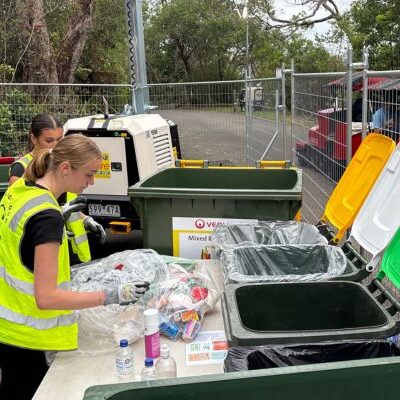
On-site assessment of 550 bins across the precinct
-
Detailed audits of front- and back-of-house waste streams
-
Financial modelling to link material flows with cost drivers
By validating reported data against real-world conditions, we established a baseline SBC could trust – and act on.
Key Insights
What the assessment revealed
The assessment revealed that the core issue wasn’t intent but visibility –limited confidence in reported diversion, high contamination, recoverable materials entering landfill, and inefficiencies in system design – all of which created a clear opportunity to improve environmental outcomes and reduce costs.
The outcome
A practical roadmap to improve performance at scale
Up to 28% reduction in waste costs
Pathway to ~90% landfill diversion
9 recoverable material streams identified
27 recommendations across four implementation phases
The roadmap focuses on practical, scalable actions, including:
-
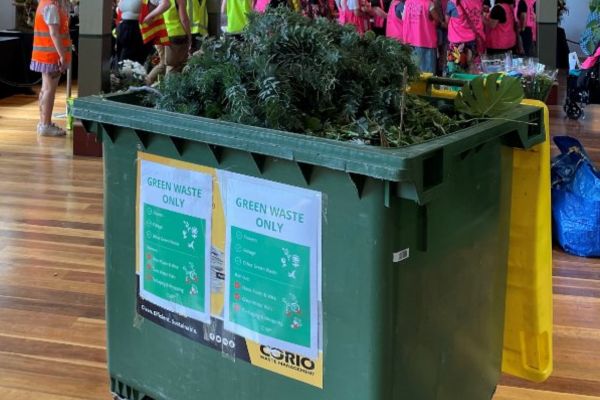
Resetting bin systems and signage
-
Improving data capture and reporting
-
Supporting tenants and contractors through education and engagement
-
Aligning packaging and procurement with circular economy outcomes across the precinct
Why it matters
From reporting to real system control
Many organisations set ambitious sustainability targets – but lack the systems to accurately measure and manage performance.
By taking a transparent, data-driven approach, South Bank Corporation now has:
-
A baseline it can trust
-
A system it can actively manage
-
A clear pathway to achieving its targets
South Bank now has a system it can actively manage – not just report on.
Our impact
Closed Loop proudly work with businesses from a range of industries to improve their sustainability impact. See the impact we make with our proud clients.
South Bank Corporation
Museums Victoria
The Y Discovery Camps (YMCA)
National Agrifood Showcase Event
MasterChef Australia